
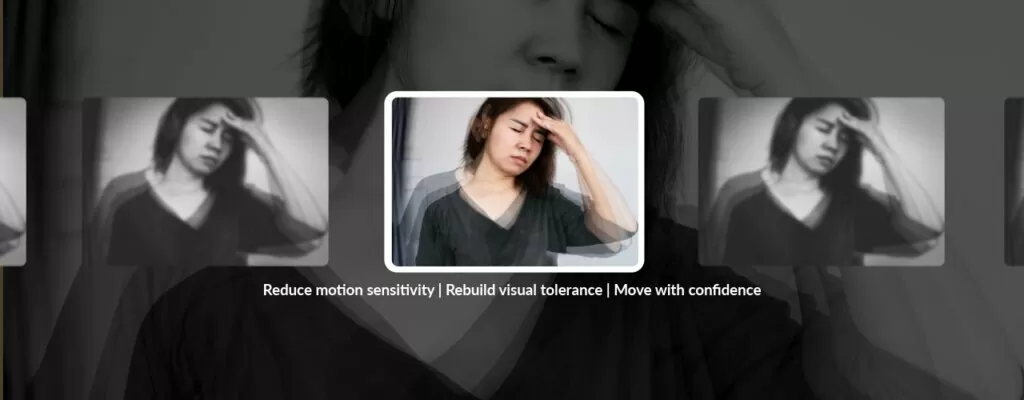
Imagine walking through a busy grocery store and suddenly feeling unsteady as people, carts, and bright displays move around you. Or perhaps turning your head quickly during a workout makes the room seem to shift. These experiences can occur with vestibular migraine, a condition that can cause vertigo, dizziness, and sensitivity to movement. For adults exploring vestibular migraine treatment physical therapy can play a role in rebuilding tolerance for movements and environments that have become difficult.
Answering Your Questions about Vestibular Migraines
What Is a Vestibular Migraine?
Vestibular migraine is a recognized migraine condition in which vestibular symptoms are a major part of the picture. These symptoms can include different forms of vertigo as well as dizziness triggered by head movement and accompanied by nausea. Episodes can vary considerably in duration and presentation.
One reason vestibular migraine can be confusing is that dizziness may feel very different from the headache symptoms people commonly associate with migraine.
Can Vestibular Migraine Happen Without a Headache?
Yes. A headache does not have to occur during every vestibular episode. Current diagnostic criteria consider a person’s migraine history as well as vestibular episodes and migraine-related features. These can include headache characteristics, sensitivity to light and sound, or visual aura.
This helps explain why someone may experience significant dizziness or vertigo and not immediately connect those symptoms with migraine.
What Does a Vestibular Migraine Feel Like?
The experience differs from person to person. Symptoms can include spinning sensations, unsteadiness, nausea, motion sensitivity, or dizziness associated with head movement. Visual motion can also provoke vertigo in some people.
For someone researching vestibular migraine treatment physical therapy may become particularly relevant when these symptoms begin limiting movement, balance, or participation in normal activities.
Why Can Busy Environments Feel So Difficult?
Walking through a crowded store, watching fast-moving screens, scrolling on a phone, or being surrounded by traffic can involve a large amount of visual information. Visually induced vertigo is among the vestibular symptoms recognized in vestibular migraine.
Rather than simply avoiding visually demanding environments, rehabilitation may gradually work on tolerance for the types of motion or visual input that are challenging for the individual.
How Does Vestibular Migraine Treatment Physical Therapy Work?
Vestibular therapy is not one standard set of exercises. A physical therapist may examine balance, walking, responses to head movement, visual motion sensitivity, and other activities that reproduce or increase symptoms. Treatment can then target the limitations identified during that assessment.
Studies have found that vestibular rehabilitation was associated with improvements in several outcomes for people with vestibular migraine.
Will Vestibular Exercises Make Me Dizzy?
Some vestibular exercises are designed to provide controlled exposure to movements or visual conditions that provoke symptoms. That does not mean the goal is to make you as dizzy as possible.
With vestibular migraine treatment physical therapy exercises can be selected and progressed according to your response. Balance activities, head movements, walking tasks, and other vestibular exercises may be incorporated based on the problems identified.
The challenge should have a purpose and progress with your abilities.
Can Vestibular Therapy Help Me Return to Exercise?
For active adults, the goal may extend well beyond feeling steadier while standing. Running requires repeated head and body movement. Strength training may involve changing positions quickly. Tennis and pickleball demand rapid visual tracking and direction changes. Cycling combines head movement, balance, and substantial visual input.
Physical therapy can progressively incorporate the movements and environments that matter to your activities instead of stopping rehabilitation once basic balance tasks become easier.
Is Physical Therapy the Only Part of Vestibular Migraine Management?
Not necessarily. Vestibular migraine management can involve multiple strategies because migraine itself is a neurological condition.
Physical therapy has a more specific role when dizziness, balance, motion sensitivity, or activity limitations can be addressed through rehabilitation. Current research suggests vestibular rehabilitation may be a useful non-drug component of management, while the evidence continues to develop.
Get Back to Moving Through Your World
Vestibular migraine can make movement feel unpredictable, particularly when symptoms appear during exercise or visually busy activities. Vestibular migraine treatment physical therapy can focus on rebuilding tolerance for those specific challenges rather than asking you to organize your life around avoiding them.
If dizziness has changed the way you work out, navigate busy places, or participate in activities you enjoy, connect with BayLife PT & Rehab, Quality Performance Rehab, Back In Action PT, & Florida PTI to build a vestibular therapy program around the movements you want back.
Tags: balance rehab, motion sensitivity, vestibular migraine, visual tolerance